01Service Provider Marketplace
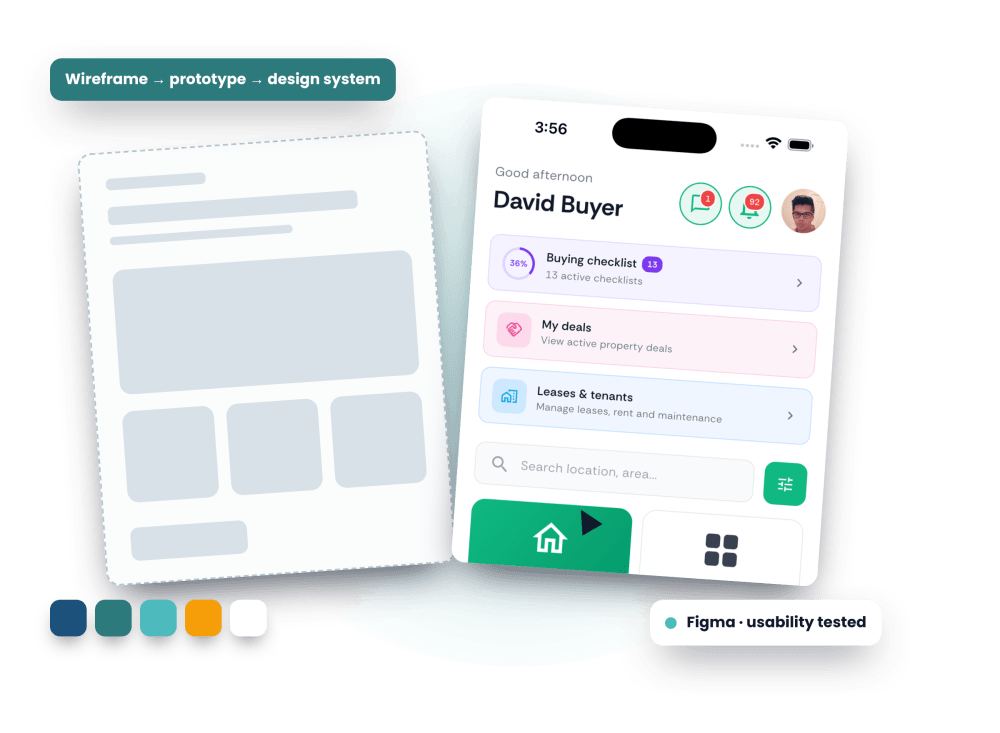
Miploy AI Work Marketplace App
An employment marketplace where AI matches freelancers and contracts based on skills, history, and fit.
35%Faster HiringRead case study
AI online marketplace solutions that help buyers find the right seller, keep bad listings out and make sure every seller gets paid on time.

Trusted by startups and SMEs worldwide
AI online marketplace solutions use your platform's own data to match buyers with the right sellers, rank listings by what actually sells, flag fake listings and risky accounts, and answer routine support questions. Metaviz builds these features into new two-sided marketplace apps, or adds them to the one you run, along with the payments, payouts and admin tools behind it.
Most marketplaces don't need every feature on day one. We usually start with one category or one city, the screens each side needs to list, find and pay, and an admin panel your team can run disputes from. If an off-the-shelf marketplace script already fits your model, we'll tell you. Custom work pays off when your matching, bidding or payout rules are the thing that sets you apart, and that's where we spend the budget.
Payments are where marketplaces get messy. Split payments, escrow-style holds, commission rules and refunds all have to agree, or sellers stop trusting the payout screen. Tadwira, our artisan services app, collects a 10% commission after each job with automated reminders, and reports 60% improved payment tracking. AI comes in once there's enough listing and booking data to learn from. Before that, good filters and a human moderator beat a model guessing on thin data.
These are the pieces we build most often for marketplaces. Most platforms need a few of them first and add the rest as volume grows.
Recommends providers, products or deals based on what each buyer searched, viewed and booked, and on each seller's skills, ratings and response time.
Recommends providers, products or deals based on what each buyer searched, viewed and booked, and on each seller's skills, ratings and response time.
01 / 08Average job vacancy time reduced by 35%, enabling quicker connections between contractors and workers.
Miploy AI Work Marketplace AppArtisans now reply to job postings within minutes, streamlining the hiring process and reducing wait times.
Tadwira Artisan Services AppOver 10,000 job matches completed within six months through AI-driven real-time matching.
Miploy AI Work Marketplace AppAutomated commission tracking and reminders have decreased delayed payments by 60%, ensuring smooth transactions.
Tadwira Artisan Services AppBelow are marketplaces we have built. Each one opens into a case study with the problem, the build, and what changed after launch.
An employment marketplace where AI matches freelancers and contracts based on skills, history, and fit.

A discovery and booking platform for local artisans with AI-driven matching, scheduling, and reviews.

A smart local discovery app - verified vendors, location-aware deals, and easy booking for restaurants, services, and experiences.
For online marketplace projects, these are the teams we usually bring in.
Built with the stack behind this work
We'd rather fix what's losing you sellers this quarter than sell you a platform for a market that hasn't arrived yet. The first build is sized to what you need now, and left in a shape that takes the next feature without starting over.
We've built work, artisan and local-deal marketplaces, including Miploy, Tadwira and DabaBlane, so we already know where matching, bidding, payments and trust tend to break.
We've wired Stripe for Miploy and the WafaCash API for Tadwira. Commissions, reminders and payout tracking get built and tested as carefully as the screens buyers see.
A seller posting a job and a buyer booking one want different things. We design web and mobile flows for each, so listing, bidding and getting paid take fewer taps.
We add matching, moderation or chatbots when your data can support them, and say plainly when a better filter or an admin rule will do the job for less.
AI helps a marketplace match buyers with the right sellers faster and catch problems before a buyer runs into them. In practice that means recommendations and search based on real behavior, listing tools that help sellers write better posts, automated checks on listings and accounts, and support chatbots that handle routine questions for both sides.
A marketplace app needs four parts: a buyer side, a seller side, payments and an admin panel. Buyers need search, filters and checkout or booking. Sellers need listing tools, order management and a payout view. Payments cover commissions, refunds and payouts, and the admin panel handles users, moderation and disputes.
The cost depends on scope, so we price it after we understand your marketplace. The biggest drivers are the number of user types, web versus mobile apps, how payments are split and held, verification and moderation needs, and how much AI matching you want at launch. A free 30-minute consultation gives you a scoped estimate.
It depends mostly on how tightly the first version is scoped. A marketplace that launches in one category with core listing, search, payments and admin moves much faster than one trying to cover every feature at once, and scope changes mid-build are the usual cause of delays. A free 30-minute consultation gives you a scoped timeline.
Use an off-the-shelf platform if your model is standard and you mainly need to test demand. Build custom when your matching, bidding, commission or payout rules don't fit a template, or when you're already outgrowing one. We'll look at your model honestly and tell you which route makes sense before you spend anything.
Most marketplaces take the buyer's payment, keep a commission and pay the rest to the seller, sometimes holding funds until the job is confirmed. Tadwira, our artisan services app, charges a 10% commission after each completed job, with automated reminders and penalties for late payment, and reports 60% improved payment tracking.
AI scores each listing, image, review and account against patterns that usually mean trouble, such as copied photos, prices far below similar items, bursts of reviews from new accounts or odd login behavior. It works best as a filter that sends suspicious cases to a human moderator, rather than one that silently deletes posts.
Yes - Miploy, an AI work marketplace that matches workers and contractors, is one example. We built Flutter mobile apps, a React.js web app, a Node.js backend, Stripe payments, ratings and an admin dashboard. The project reports 35% faster hiring, 50% stronger retention and 15h time saved.
Tell us where your buyers or your sellers are dropping out, and we will tell you what it would take to fix.